Why Are You Still Struggling with Remote Meetings When Voice Tech Can Make Them Effortless?
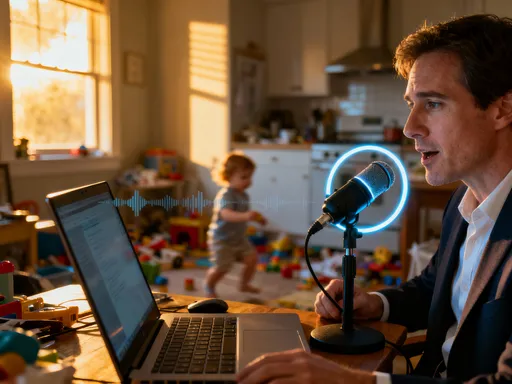
Imagine this: you're on a work call, but your toddler is crying, the Wi-Fi cuts out, and no one can hear your key idea. We’ve all been there. These moments don’t just frustrate—they chip away at confidence and productivity. But what if your voice could be heard clearly, no matter the chaos? Modern voice calling tools aren’t just about sound quality—they’re about reclaiming focus, time, and connection in our daily work lives. You’re not imagining it—those awkward pauses, the 'Can you repeat that?' moments, the exhaustion after back-to-back calls—they add up. And they’re not just technical glitches. They’re stealing your energy, your presence, and your peace. The good news? You don’t have to keep living with them.
The Hidden Cost of Poor Communication at Work
Let’s be honest—how many times have you finished a call feeling more drained than when you started? It’s not just the length of the meeting. It’s the constant effort to be heard over background noise, the frustration of repeating yourself, the mental load of wondering if your point even landed. These aren’t small inconveniences. They’re quietly eroding your confidence and your team’s trust in your voice. Think about it: when someone consistently struggles to be understood, others start to assume they’re unprepared or unclear—even if that’s far from the truth.
And it’s not just about perception. Misheard instructions lead to mistakes. Dropped audio means missed deadlines. Background noise—from a barking dog to a noisy neighbor—can make you sound unprofessional, even when you’re doing your best. One study found that poor audio quality can reduce comprehension by up to 40%. That means nearly half of what’s said in a meeting might not be understood the first time, leading to follow-up emails, clarification calls, and wasted hours. That’s not just inefficient—it’s exhausting.
But beyond the numbers, there’s an emotional toll. When you’re constantly fighting to be heard, you start to hold back. You wait longer to speak, you downplay your ideas, you avoid volunteering for key discussions. That’s not just a communication problem—that’s a confidence problem. And it’s one that hits hard when you’re already juggling work, family, and everything else. The truth is, poor communication doesn’t just slow down work—it slows down *you*. It makes you feel invisible in rooms where your voice matters. And that’s not something you should have to accept.
How Voice Calling Tools Quiet the Chaos
Now, imagine a different kind of call. One where your voice comes through clearly, even if your child walks in with a juice box. One where the neighbor’s lawnmower doesn’t drown you out. That’s not magic—it’s modern voice technology working quietly in the background. And the best part? You don’t need to be a tech expert to use it. These tools are designed to be invisible helpers, like noise-canceling headphones for your voice.
Here’s how it works: today’s voice calling platforms use smart algorithms that can separate your voice from background noise. They don’t just lower the volume of distractions—they actually identify and suppress them. So when your dog barks or the washing machine beeps, the system knows it’s not you speaking and filters it out. At the same time, your voice is enhanced—made clearer, more balanced, and easier to understand. It’s like having a personal sound engineer fine-tuning your audio in real time.
And it’s not just about blocking noise. These tools also balance audio levels automatically. Have you ever been in a call where one person sounds like they’re shouting from a tunnel, while another is barely a whisper? That’s because not everyone’s microphone or internet connection is the same. Modern systems adjust for that, so everyone sounds like they’re in the same room. No more asking people to speak up or turn down their volume. No more straining to hear. Just clear, natural conversation.
The real power of these tools isn’t in the tech specs—it’s in how they restore calm. You don’t have to stress about your environment. You don’t have to apologize for life happening around you. You can focus on what you’re saying, not how you’re being heard. That’s not just convenient—it’s liberating.
From Frustration to Flow: A Day in the Life
Let’s walk through a typical morning for Sarah, a project manager and mom of two. Her day starts at 6:30 a.m. with breakfast, school bags, and a last-minute permission slip search. By 8:15, she’s dropping the kids at school, then rushing home to join a 9 a.m. strategy call. In the past, this would’ve been a recipe for stress. She’d be breathless, her hair half-dry, trying to log in while one kid shouts from the backseat. And when she finally gets to her desk, the call is already underway—her camera’s off, her mic’s picking up street noise, and she’s too flustered to speak up.
But today is different. She joins the call from her car, using her phone’s built-in voice enhancement. The traffic noise fades into the background. Her voice comes through steady and clear. When she shares her update, the team hears every word. No one asks her to repeat herself. No one notices she’s not at her desk. She feels present, prepared, and in control.
Later, she has a client presentation at 11. She’s nervous—this is a big opportunity. But instead of worrying about her audio, she focuses on her message. Her voice is smooth, her tone confident. Afterward, a colleague messages her: 'You sounded so clear and composed—I could tell you were really in your element.' That feedback isn’t about her skills alone. It’s about how she was *heard*. And that makes all the difference.
This isn’t a fantasy. It’s what happens when technology removes the friction. Sarah isn’t using expensive gear or complex setups. She’s using tools that are already built into her devices—tools she didn’t even know were there. And because she’s not fighting with her tech, she can show up as her best self. That’s the shift we’re talking about: from surviving calls to thriving in them.
Making It Work for You: Simple Setup, Real Results
You might be thinking, 'This sounds great, but I’m not tech-savvy.' That’s okay. The truth is, most of these tools are already on your devices—you just need to know how to use them. Let’s walk through a few simple steps you can take today to improve your calling experience.
First, check your microphone settings. On most laptops and phones, there’s an option for 'voice isolation' or 'background noise suppression.' It’s often buried in the audio or accessibility settings, but it’s there. Turn it on. It’s like flipping a switch that tells your device, 'Focus on my voice, not the noise around me.'
Next, test your audio before important calls. Most platforms—like Zoom, Teams, or Google Meet—have a test feature. Use it. Speak naturally, walk around your space, see how your voice comes through. You might be surprised. One client told me, 'Wait, I didn’t know my laptop could do that!'—after discovering her built-in mic had noise suppression all along.
Also, consider your environment. You don’t need a soundproof room. Just try to face away from noisy appliances or open windows. If you’re on your phone, use headphones with a mic—they often provide better clarity than your device’s built-in mic. And if you’re in a pinch, stepping into a closet or a quiet corner can make a big difference. Fabric absorbs sound, so you’ll actually get clearer audio in a small, soft space.
The goal isn’t perfection. It’s progress. You don’t need to overhaul your setup. Just make one small change this week. Turn on noise suppression. Test your mic. Try a different spot in your home. Small tweaks lead to big shifts. And once you experience a call where you’re truly heard, you’ll wonder why you waited so long.
Beyond the Office: Strengthening Personal Connections
Here’s something we don’t talk about enough: voice tools aren’t just for work. They matter just as much in our personal lives. Think about your last call with a parent, a sibling, or a close friend. Did you really hear them? Did they hear you? Background noise, poor connections, and muffled voices can make even the most important conversations feel distant.
Now imagine calling your mom and actually hearing the warmth in her voice—not the static or echo that usually comes through. Imagine your sister laughing on the other end, and you catch every nuance, not just the punchline. Clearer audio means deeper listening. And deeper listening means stronger connections.
For many of us, these calls are lifelines. A weekly check-in with an aging parent. A mentoring call with a younger colleague. A catch-up with a friend who lives across the country. When the sound is clear, the conversation flows. You don’t have to ask, 'What did you say?' You don’t miss the subtle shifts in tone that tell you how someone is really feeling. You’re not just hearing words—you’re feeling the presence behind them.
And that changes everything. It turns a routine call into a moment of real connection. It helps you stay close, even when life keeps you apart. Technology isn’t replacing human connection—it’s protecting it. By making our voices clearer, it helps us show up more fully, not just at work, but in the relationships that matter most.
Future-Proofing Your Voice
The future of voice technology isn’t about flashy gadgets or complicated interfaces. It’s about getting even better at the basics—helping you be heard, effortlessly. And the good news? It’s already moving in that direction.
Imagine a system that learns how you speak. It notices when you talk softly in the morning and boosts your volume just a little. It detects when your room has a lot of echo and adjusts in real time. It even knows when you’re in a noisy environment and switches to a stronger noise-suppression mode—all without you lifting a finger.
This isn’t science fiction. Some platforms are already using adaptive audio that responds to your environment and speaking style. The goal isn’t to make you dependent on tech—it’s to make the tech disappear. So you can focus on what you’re saying, not how you’re saying it.
And the best part? These tools are becoming more accessible, not less. They’re being built into everyday devices, offered as free features, and designed for real people—not tech experts. You don’t need to wait for the 'perfect' setup. You can start benefiting from smarter voice tools today.
As we move forward, the question isn’t whether you’ll use these tools—it’s how soon you’ll realize you already can. The future of communication isn’t about doing more. It’s about doing it with less effort, more clarity, and greater presence. And that’s a future worth embracing.
Your Voice, Your Power
At the end of the day, being heard isn’t just about sound quality. It’s about being seen. It’s about knowing that your ideas matter, that your voice has value, that you belong in the conversation. When technology supports that, it’s not just a tool—it’s an act of self-respect.
Every time you speak up in a meeting, check in with a loved one, or share a hard-won insight, you’re showing up. And when your voice comes through clearly, you’re not just heard—you’re believed. You’re trusted. You’re respected.
That’s the real power of voice technology. It doesn’t change who you are. It helps the world hear who you already are. It protects your energy, so you’re not drained by bad calls. It gives you confidence, so you don’t hold back. It creates space for you to grow, lead, and connect—without apology.
You don’t have to accept the chaos. You don’t have to keep fighting to be heard. The tools are here. They’re simple. They’re accessible. And they’re ready to work for you.
So take a deep breath. Turn on that noise suppression. Test your mic. Make one small change. Because your voice matters. And when you’re heard clearly, you’re not just participating—you’re leading. One clear, confident call at a time.