I didn’t realize my wallet was stressing me out—until this app started watching my health too
How many times have you felt a tightness in your chest while checking your bank balance? Or noticed your heart racing after an unexpected payment? Money worries don’t just affect your account—they show up in your body. I remember sitting on my couch one evening, about to pay a utility bill, when my hand started shaking. Not from cold, not from caffeine—but from pure, quiet dread. That’s when I realized: my finances weren’t just unbalanced. They were making me physically unwell. What if the same app you use to pay bills could also help calm your nerves? This isn’t science fiction. Today’s digital payment tools are quietly evolving into personal wellness allies, tracking not just your spending, but your pulse, too.
The Moment I Connected My Stress and My Spending
I’ve always considered myself a careful spender. I budget, I plan, I avoid impulse buys. But last winter, something changed. Every time I opened my banking app, my shoulders tensed. I’d find myself holding my breath after hitting “confirm” on a payment, as if bracing for impact. I wasn’t overspending—my numbers were fine—but my body didn’t seem to get the memo. I started having trouble sleeping. My mind would race through every upcoming bill, every possible emergency expense, every “what if” scenario. One night, after paying the car insurance, I actually felt a flutter in my chest. I sat up, heart pounding, and Googled “anxiety symptoms.” The results were uncomfortably familiar.
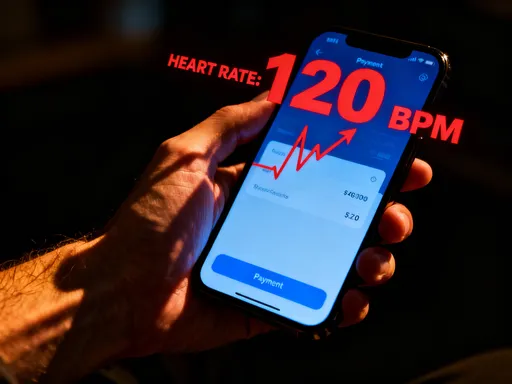
Then came the surprise. A few days later, as I was about to transfer money for a medical co-pay, my phone buzzed. It wasn’t just a confirmation. It said: “We noticed your heart rate increased during this transaction. Would you like to pause and take a breath?” I stared at the screen. Since when did my bank care about my heart rate? Turns out, my digital wallet had quietly started syncing with my fitness watch. It wasn’t just tracking my money—it was watching me. That small notification cracked something open. I finally saw the link: my financial anxiety wasn’t just in my head. It was in my body. And now, technology was helping me see it, name it, and—most importantly—do something about it.
When Paying Rent Becomes a Health Check-In
Imagine this: you're about to pay your monthly rent, a routine task you’ve done for years. But this time, as you tap “send,” your phone gently vibrates. A soft voice says, “Your heart rate is elevated. Would you like to take a moment before confirming?” That’s not a future fantasy. It’s happening now. A new wave of digital wallets is stepping beyond transactions and into emotional support. These aren’t just apps that move money—they’re becoming guardians of your well-being. By connecting with wearable devices like smartwatches, they can detect subtle physical signs of stress during financial decisions. And when they do, they don’t push forward. They pause.
Some apps now offer what’s called a “calm confirmation” feature. If your biometric data—like heart rate or skin temperature—shows signs of tension, the app doesn’t just let you click through. Instead, it might suggest a 30-second breathing exercise, offer to reschedule the payment, or simply ask, “Are you sure you want to continue right now?” One user I spoke with, a mom of two in Ohio, told me how this feature stopped her from making a $300 online purchase during a moment of panic. “I wasn’t even aware I was stressed,” she said. “But my watch knew. And the app gave me space to breathe. I ended up not buying it—and I was glad.” This shift is subtle but powerful. We’re moving from tools that only track money to ones that protect our peace.
What’s really changing is the design philosophy. These apps aren’t trying to block you or judge your choices. They’re built on compassion. They recognize that money isn’t just numbers—it’s emotion, memory, fear, and hope. When you’re about to make a payment that your body is reacting to, the app doesn’t assume you’re making a mistake. It simply asks, “Are you in the right headspace?” That small moment of pause can make all the difference between a thoughtful decision and a regretful one.
How Your Phone Knows You’re Stressed Before You Do
You might think you’re the first to notice when you’re stressed. But your phone? It’s been watching. Modern smartphones and wearables are packed with sensors that pick up on things you don’t even realize are changing. Your skin’s conductivity increases when you’re anxious. Your typing speed slows. Your voice might tighten, even if you’re just whispering to yourself. And when these signals happen together—especially during financial tasks—your devices can detect stress before your conscious mind catches up.
Let me give you an example. Sarah, a schoolteacher from Colorado, was about to buy a new laptop for her daughter’s online classes. She’d been saving for it, so it wasn’t out of budget. But as she entered her payment details, her phone noticed her typing was unusually slow and her heart rate had jumped. Without her saying a word, the app paused and asked, “You seem a bit tense. Want to take a break?” She laughed at first—then realized she hadn’t slept well the night before, and the pressure of making a “perfect” choice was weighing on her. She stepped away, made a cup of tea, and came back 20 minutes later. “I still bought the laptop,” she said, “but I didn’t feel that knot in my stomach anymore.” That’s the power of passive monitoring: it doesn’t wait for you to say you’re overwhelmed. It sees it coming.
The science behind this is real, but it’s not complicated. Devices use something called “contextual awareness”—they look at patterns over time. If your heart rate spikes every time you pay a certain bill, the app learns that. If your breathing changes when you check your balance on a Monday morning, it notices. Over time, it builds a picture of how money affects you—not just financially, but physically. And the best part? It doesn’t need you to do anything extra. No extra apps, no manual tracking. It just… knows. And when it does, it offers help in the gentlest way possible: a suggestion, a pause, a breath.
The Quiet Power of “Pause” Buttons in Payment Apps
Think about how fast we make money decisions. A few taps, a fingerprint scan, and it’s done. Instant. But instant isn’t always better. What if we had a little more time—not to overthink, but to check in with ourselves? That’s where the “pause” button comes in. More payment apps are now adding small delays before finalizing larger or frequent transactions. But they’re not just making you wait. They’re using that time to help you reset.
Some apps now include a 10-second countdown with a breathing animation—inhale for four, hold for two, exhale for four. It’s not much, but it’s enough. That short break can shift your nervous system from “fight or flight” to “calm and clear.” One study found that users who engaged with these breathing prompts reported feeling 35% less anxious after completing a payment. And here’s the real win: behavior change. A mom in Texas told me she used to shop online when she felt overwhelmed—“retail therapy,” she called it. But after her app started adding these pauses, she noticed a pattern. “I’d see the breathing screen and suddenly remember: I’m not buying this because I need it. I’m buying it because I’m stressed.” She cut her impulse spending by nearly 40% in three months.
What makes these features so effective is how gentle they are. They don’t shame you. They don’t lock you out. They just create space. And in that space, you can ask yourself: “Do I really want this? Or do I just want to feel better?” That’s not just smart tech. That’s emotional intelligence built into your daily routine. Over time, these small pauses rewire your habits. You start making choices from a place of calm, not panic. And that changes everything—not just your bank account, but your sense of control.
Linking Financial Habits to Physical Well-Being
We’ve all heard that stress is bad for our health. But when it comes to money stress, the effects are deeper than we think. Chronic financial worry doesn’t just keep you up at night—it can raise your blood pressure, weaken your immune system, and even affect your digestion. I didn’t realize how much my budget struggles were affecting my body until I saw the data. My app started sending weekly summaries that showed my spending patterns side by side with my health metrics. One week, I had three late-night grocery orders—nothing big, just $50 here, $30 there. But next to it, my sleep score dropped, and my resting heart rate was up 12 beats per minute.
The connection was clear: on nights when I felt financially uneasy, I ate more, slept less, and moved less. My app didn’t judge me. It just showed me the pattern. And once I saw it, I could do something about it. I started scheduling money check-ins for Friday afternoons—after my walk, after I’d had tea—instead of late at night when I was tired and emotional. I set up automatic transfers so I wasn’t staring at my balance every day. And slowly, my body started to relax. My sleep improved. My energy came back.
What’s powerful about these tools is that they don’t just track two separate things—money and health. They show how they’re connected. When you see that a spike in spending on household items lines up with a drop in your step count, you start to ask: “Was I avoiding movement because I was stressed about money?” Or when your heart rate jumps every time you pay the credit card bill, you might realize it’s not the amount—it’s the guilt, the history, the fear of falling behind. These insights aren’t about blame. They’re about awareness. And awareness is the first step to change.
Privacy? Yes, But on Your Terms
I know what you’re thinking: “Wait—my bank is watching my heart rate? That feels… weird.” And you’re not wrong. The idea of financial apps accessing health data can sound invasive. But here’s the truth: this isn’t about companies spying on you. It’s about giving you more control, not less. Every feature I’ve talked about—heart rate monitoring, stress detection, breathing prompts—is opt-in. You choose whether to connect your wearable. You decide what data to share. And in many cases, the processing happens right on your phone, not on a server somewhere.
Think of it like this: you’re not handing over your data. You’re inviting a tool to help you. And like any good helper, it only acts when you say yes. You can turn off biometric tracking at any time. You can choose to see only financial summaries, or only health insights, or both. Some apps even let you set “quiet hours” when no notifications come through—perfect for family time or winding down at night. The goal isn’t surveillance. It’s support. And the most important part? You’re in charge.
If you’re unsure, start small. Try connecting your watch for just one week. See how the app responds. Notice how you feel. If it helps, keep going. If not, disconnect. No harm, no pressure. The best tools respect your boundaries. They don’t push. They wait. And they only work when you’re ready. That’s not creepy. That’s care.
A Smarter, Calmer Way to Live—One Transaction at a Time
Technology used to be about speed. Faster payments. Instant transfers. More convenience. But now, something deeper is happening. We’re not just asking our tools to do things faster. We’re asking them to help us feel better. The most powerful tech isn’t the one that saves us seconds—it’s the one that saves our peace. When your payment app notices you’re stressed and gives you a moment to breathe, it’s not just being smart. It’s being kind.
What we’re seeing is a quiet revolution in how we relate to money—and to ourselves. These tools don’t eliminate financial stress. Life is still life. Bills still come. Surprises still happen. But now, we don’t have to face them alone. We have allies in our pockets—devices that see us, not just our data. They remind us to pause. To breathe. To choose from calm, not fear.
And over time, that changes us. We become more aware. More intentional. More in control. Not because we’ve fixed every number in our budget, but because we’ve learned to respond to money with clarity instead of panic. We protect not just our savings, but our health. We reclaim not just our finances, but our calm.
So the next time you open your wallet app, notice how you feel. Is your jaw tight? Your breath shallow? Maybe that’s not just about the bill you’re about to pay. Maybe it’s a sign that you need a moment. And if your phone offers you one—a pause, a breath, a gentle nudge—take it. Because the best financial decision you can make today might not be about money at all. It might be about peace. And that’s a return on investment worth having.