Why Are You Still Juggling Apps When One Could Run Your Whole Day?
How many times today did you switch between apps just to check your schedule, reply to messages, and track your to-do list? It’s exhausting—like carrying ten different keys for one door. What if your phone could finally work *with* your life, not against it? I felt the same until I discovered how a few smart app habits completely reshaped my rhythm. This isn’t about more tech—it’s about better harmony. And if you’re someone who’s juggling kids, chores, work, and still trying to find a moment for yourself, this is for you. Let’s talk about how we can stop surviving our screens and start thriving with them.
The App Overload Problem: When Tools Become Burdens
Imagine this: your alarm goes off at 6:30 a.m., and before your feet even touch the floor, your phone buzzes. A calendar alert reminds you about a school meeting. Then a text from your sister about dinner plans. A reminder pops up that your online order shipped. And somewhere in the back, your task list whispers—"Don’t forget the dentist appointment!" You open your phone, and suddenly you’re in a maze of notifications, each one pulling you in a different direction. By the time you’ve checked five apps, you’re already tired. Sound familiar?
This isn’t just inconvenient—it’s emotionally draining. We didn’t sign up for this kind of chaos. Most of us started using apps to feel more in control, but over time, they’ve turned into tiny stress machines. Each time we switch from one app to another, our brain has to reorient itself. That’s called context switching, and it costs us focus, energy, and time. Studies show it can take up to 20 minutes to fully regain concentration after a single interruption. Now multiply that by ten or fifteen app switches a day. No wonder we feel scattered.
The real problem isn’t the apps themselves—it’s how we’ve let them pile up without a plan. We downloaded a new to-do list app when the old one felt slow. We signed up for a family calendar because someone recommended it. We kept a notes app for grocery lists, another for recipes, and a third for work ideas. Before we knew it, our digital life became a cluttered closet—full of useful things, but impossible to navigate. And the worst part? We start to believe this chaos is normal. But it’s not. It’s just habitual.
Here’s the good news: you don’t have to live this way. You don’t need to be a tech expert or spend hours organizing. What you need is a shift in mindset—from collecting tools to creating flow. Because when your apps work together, they stop being distractions and start being helpers. And that’s where the real change begins.
Rhythm Over Routine: Redefining How We Live with Technology
We’ve been taught to follow rigid routines: wake up at 5 a.m., meditate for 10 minutes, journal, exercise, and crush your to-do list by noon. But let’s be honest—life doesn’t work like that. Some days you’re energized in the morning. Other days, you need an extra cup of coffee just to open your eyes. Forcing yourself into a fixed schedule often leads to guilt, frustration, and giving up altogether. What if, instead of fighting your natural rhythm, your technology could flow with it?
Think of your energy like the tide—rising and falling throughout the day. Mornings might be your peak focus time, perfect for deep work or planning. Afternoons could be slower, better for errands or light tasks. Evenings are for winding down, connecting with family, or reflecting. When your apps understand this rhythm, they stop demanding your attention at the wrong time and start supporting you when it matters most.
For example, instead of getting a push notification for a work task at 8 p.m., your app could wait until tomorrow morning when you’re fresh. Or your grocery list could auto-populate based on your usual weeknight dinners, ready when you open the app on your way home. These small adjustments don’t just save time—they reduce resistance. You’re no longer fighting your phone; it’s working with you.
I remember when I first tried this. I used to get frustrated that I never finished my to-do list by lunchtime. Then I realized I was scheduling heavy tasks for the afternoon, right when my energy dipped. Once I started using an app that let me tag tasks by energy level—"high focus," "low effort," "quick win"—everything changed. I scheduled writing for the morning, calls for midday, and sorting paperwork for that 3 p.m. slump. Suddenly, I wasn’t failing my routine—I was honoring my rhythm. And that made all the difference.
The beauty of this approach is that it’s personal. Your rhythm isn’t the same as your neighbor’s, and that’s okay. Technology should adapt to you, not the other way around. When your apps reflect your natural flow, you stop feeling behind and start feeling in sync.
The Power of One: Choosing Central Hubs Over Scattered Tools
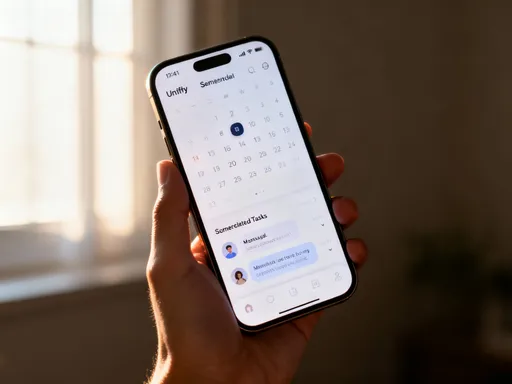
If app overload is the problem, then consolidation is the solution. Instead of spreading your life across ten different apps, what if you could bring it all into one central hub? Think of it like your digital living room—a single place where everything important comes together. Your calendar, your to-do list, your notes, your reminders, even your family plans. No more jumping from app to app. Just one place to check, update, and breathe.
Now, I know what you might be thinking: "But I like my current apps!" And that’s fine. You don’t have to give them up completely. The goal isn’t to delete everything—it’s to choose one platform that can do most of what you need, so you’re not constantly switching. Look for apps that offer cross-function search (so you can find a recipe, a task, and a calendar event in one search bar), timeline views (to see your day at a glance), and smart suggestions (like reminding you to leave early for an appointment based on traffic).
When I made this shift, I started by asking myself: "Which app do I open most often?" For me, it was my calendar. So I picked a platform that let me add tasks, notes, and reminders right inside the calendar view. Then I slowly moved my other lists over—my grocery list, my book ideas, even my daughter’s soccer schedule. It didn’t happen overnight. I gave myself a week to test it, another week to adjust. But within a month, I was spending less time managing apps and more time living my life.
Here’s a simple way to start: pick one area to consolidate. Maybe it’s your task list and calendar. Or your shopping lists and meal plans. Use the hub app’s features to bring them together. For example, if you’re planning dinner on Tuesday, add it to your calendar, attach the recipe as a note, and let the app generate a shopping list automatically. Now, one action does the work of three. That’s the power of integration.
And don’t worry about losing your old data. Most hub apps let you import from others, or at least copy and paste what matters. The key is to start small, stay consistent, and focus on what brings you peace—not perfection.
Smart Automation: Letting Apps Handle the Little Things
You don’t need to be a programmer to use automation. In fact, the best automations are the simplest ones—tiny helpers that take care of routine tasks so you don’t have to think about them. Imagine this: you’re driving home, and as you pass the grocery store, your phone gently reminds you to pick up milk. Or every Monday morning, your app sends you a digest of the week’s appointments, tasks, and weather—no opening five different screens.
These aren’t futuristic dreams. They’re features available in many widely used apps today. Location-based reminders, automatic task sorting, scheduled summaries—they all exist, and they’re easier to set up than you think. The goal isn’t to automate everything; it’s to offload the small decisions that drain your mental energy. Because every time you don’t have to remember something, you free up space for what really matters—like being present with your kids, enjoying a quiet cup of tea, or finally starting that hobby you’ve been putting off.
Let me share a real example from my life. I used to forget to take my vitamins. Not because I didn’t care, but because I’d get caught up in the morning rush. Then I set up a simple automation: every day at 8:15 a.m., my phone reminds me—"Time for your vitamins!" It’s not fancy, but it works. And because it’s consistent, it became a habit. No willpower needed.
Another favorite: I have an automation that moves any task labeled "Later" to the next Friday if it hasn’t been done. Instead of guilt-tripping myself for not finishing something, I get a gentle nudge: "Still want to do this?" It removes the pressure and keeps things moving. Small wins like these add up to big relief.
To get started, think about one repetitive task you do every week. Maybe it’s sending a grocery list to your partner. Or checking if the kids’ permission slips are signed. Could an app remind you automatically? Could it group related tasks together? Most hub apps have built-in automation features—look for phrases like "smart suggestions," "daily digest," or "routine builder." Try one at a time. See what sticks. The point isn’t to become a robot—it’s to give your brain a break.
Family Flow: Syncing Life with Loved Ones Without the Stress
Running a household is like conducting an orchestra—everyone has their own rhythm, and somehow, you have to keep it all in harmony. Without a system, it’s easy to fall into patterns of nagging, last-minute surprises, and miscommunication. "Did you pick up the dry cleaning?" "I thought you were handling the school forms!" "Why is the dinner time changed?" These little friction points pile up, and before you know it, you’re stressed and disconnected.
That’s where shared digital tools can make a real difference. A family calendar that everyone can see. A chore tracker that assigns tasks fairly. A shared shopping list that updates in real time. These aren’t just organizational tools—they’re peacekeepers. When everyone knows what’s happening and who’s responsible, there’s less guessing, less guilt, and more trust.
I’ll never forget the week my daughter had a science fair, my husband had a work trip, and I had a doctor’s appointment—all on the same day. In the past, I would’ve panicked. But that year, we’d set up a shared calendar. We color-coded each person’s events, added reminders for big deadlines, and even blocked "family time" on weekends. When the busy week came, we weren’t scrambling. We were prepared. And that made all the difference.
The key is to set it up together. Don’t just announce a new system—invite your family into it. Let your kids pick the icons for their activities. Let your partner choose how chores are assigned. When everyone feels ownership, they’re more likely to use it. And remember: it doesn’t have to be perfect. If someone forgets to check the list, that’s okay. The goal is progress, not control.
Over time, these shared tools do more than organize—they build connection. You start to see each other’s lives more clearly. You appreciate the effort behind the scenes. And you create space for more joy, less friction.
Growing with Your Apps: Tracking Progress Without Pressure
We often think of apps as tools for productivity—but they can also support personal growth in quiet, meaningful ways. Imagine an app that gently tracks your mood over time, not to judge you, but to help you notice patterns. Or one that logs your reading minutes, not to shame you for skipping a night, but to celebrate when you reach 50 hours in a year. These aren’t about performance—they’re about awareness.
For months, I struggled with afternoon fatigue. I’d hit a wall around 3 p.m., and no amount of coffee helped. Then I started using a simple habit tracker to log my energy levels each day. After a few weeks, I noticed a pattern: on days I walked after lunch, my energy stayed steady. On days I skipped it, I crashed. That wasn’t magic—it was data with compassion. And it gave me the nudge I needed to build a sustainable habit.
The trick is to keep it kind. Don’t track everything. Don’t set rigid goals. Pick one area you’d like to grow—sleep, gratitude, movement, learning—and let your app support you gently. Maybe it sends a weekly summary: "You slept 7+ hours on 4 nights this week—great job!" Or a kind reminder: "You’ve been meaning to call your mom. Want to try today?" These small moments of reflection build quiet confidence over time.
And when you review your progress, don’t look for perfection. Look for patterns. Look for effort. Look for the times you showed up, even when it was hard. Because growth isn’t about hitting targets—it’s about showing up for yourself, again and again.
Calm in Your Pocket: Designing a Digital Life That Feels Lighter
Here’s the truth: your phone doesn’t have to feel heavy. It can be a source of calm, clarity, and connection. But that only happens when you design it that way. Right now, take a moment to look at your home screen. How many apps are there? How many do you actually use? Which ones make you feel stressed just seeing the icon?
This is your invitation to audit your digital life—not with judgment, but with care. Uninstall the apps that don’t serve you. Mute the notifications that pull you away from what matters. Keep only what brings you ease, joy, or real value. And remember: simplicity isn’t about having less—it’s about making room for more of what you love.
When you use technology with intention, it stops controlling you and starts supporting you. It becomes a quiet partner in your days, helping you stay connected to your family, your goals, and yourself. You’ll still have busy days. You’ll still face challenges. But you’ll also have more mental space, more emotional ease, and more moments of peace.
So ask yourself: what kind of digital life do you want? One that drains you? Or one that lifts you up? You don’t have to juggle ten apps to feel in control. You just need one that works with you. And when you find that rhythm, you’ll wonder why you waited so long to make the shift. Because technology, at its best, doesn’t take over your life—it helps you live it more fully.