How I Naturally Boosted My Balance and Changed My Daily Life
Balance isn’t just for athletes—it affects how we walk, stand, and move through life. I used to wobble getting off chairs and felt unsteady on stairs, but after simple daily changes, everything shifted. It wasn’t about intense workouts or gadgets. This is a real, down-to-earth story of how small adjustments improved my body’s stability. If you’ve ever felt a little shaky or just want to move with more confidence, this journey might surprise you.
The Moment I Realized My Balance Was Off
It started with something small—standing up from the couch. I remember reaching for the armrest not for comfort, but because I felt like I might tip sideways. At first, I dismissed it as fatigue or a momentary lapse. But then it happened again: turning quickly in the kitchen, my foot slipped slightly and my arms flailed out for balance. I didn’t fall, but the jolt of fear stayed with me. That was the first time I admitted to myself that something was off. I wasn’t clumsy. I wasn’t elderly. Yet my body no longer responded the way it used to.
These moments multiplied. Walking across a slightly uneven sidewalk required more focus. Stepping off a curb felt like a minor gamble. I began noticing how often I leaned on counters, doorframes, or furniture—unconsciously using them as anchors. What surprised me most was how long I’d ignored the signs. Balance, I realized, isn’t something we think about until it falters. It’s like breathing: effortless and invisible until it becomes difficult. For women in their 30s to 50s, this shift can be especially subtle. Life fills up with responsibilities—work, children, household demands—and physical awareness often takes a back seat.
The turning point came during a family hike. My teenage daughter walked ahead with ease, while I struggled on a gentle incline, gripping tree branches for support. I felt embarrassed, not because I was weak, but because I hadn’t seen it coming. That day, I made a quiet promise: I would pay attention. Not to fix myself in a dramatic way, but to understand what my body was telling me. I wasn’t looking for a fitness transformation. I just wanted to feel steady again—to trust my own two feet.
Why Balance Matters More Than You Think
Beyond preventing falls, good balance supports independence, confidence, and overall quality of life. It’s not just about staying upright; it’s about moving through the world with assurance. The human balance system is a sophisticated network involving three key inputs: the inner ear (vestibular system), vision, and sensory feedback from muscles and joints (proprioception). These systems work together seamlessly when functioning well, allowing us to navigate stairs, turn quickly, or adjust to slippery surfaces without conscious thought.
As we age, these systems can decline—sometimes gradually, sometimes accelerated by inactivity. According to the Centers for Disease Control and Prevention (CDC), one in four adults over 65 falls each year, and falls are the leading cause of both fatal and non-fatal injuries in this group. But the foundation for those risks is often laid years earlier. Even in midlife, minor balance deficits can go unnoticed until a misstep turns into a stumble. The good news is that balance is not a fixed trait. Like strength or flexibility, it can be improved at any age with the right approach.
Research shows that balance training significantly reduces fall risk, even among older adults with existing mobility challenges. A study published in the Journal of the American Geriatrics Society found that structured balance exercises reduced fall rates by up to 30% in community-dwelling adults. But you don’t need a clinical setting to benefit. Everyday awareness and small movements can make a meaningful difference. The key is consistency and intention. When balance becomes part of your daily attention—not just an afterthought during exercise—you begin to retrain your body’s automatic responses.
For women managing busy households, the stakes are personal. Falling isn’t just a physical risk; it can mean time away from family, loss of independence, or fear that limits activity. Improving balance isn’t about achieving perfection. It’s about creating a buffer—a margin of safety that allows you to keep doing what you love, whether that’s playing with grandchildren, gardening, or simply walking the dog without worry.
Common Lifestyle Habits That Quietly Weaken Balance
Modern life, for all its comforts, often works against physical stability. One of the biggest culprits is prolonged sitting. Many women in this age group spend hours seated—at desks, in cars, on sofas—without realizing how this affects neuromuscular coordination. When muscles aren’t regularly engaged, they lose tone and responsiveness. The core, glutes, and leg muscles, which are essential for balance, become underused and less effective at stabilizing the body.
Another overlooked factor is footwear. Many everyday shoes, especially flat sneakers or flexible flats, offer little support or feedback to the feet. Over time, relying on cushioned or overly supportive shoes can dull the sensory receptors in the soles, reducing proprioception. This means your brain gets less accurate information about where your feet are in space, making balance reactions slower. Similarly, constantly walking on flat, predictable surfaces like pavement or carpet limits the natural adjustments your body needs to stay sharp.
Poor posture, often developed from screen use, also plays a role. Hunching over phones or computers shifts the center of gravity forward, forcing the body to compensate in ways that strain the lower back and weaken postural muscles. This misalignment affects how weight is distributed during movement, increasing instability. Even something as simple as carrying a heavy purse on one shoulder can create muscular imbalances that influence balance over time.
The cumulative effect of these habits is a gradual decline in stability—one that feels normal because it happens so slowly. The body adapts, but not always in healthy ways. The good news is that reversing these patterns doesn’t require drastic changes. It starts with awareness: noticing how you sit, stand, and move throughout the day. Small shifts—like standing more, choosing supportive footwear, or adjusting your workspace—can lay the groundwork for better balance.
The Science Behind Natural Balance Improvement
Balancing on one foot may seem simple, but it activates a complex network of nerves, muscles, and brain signals. This is where the concept of neuroplasticity comes in—the brain’s ability to reorganize and form new neural connections throughout life. Just as learning a new skill strengthens certain pathways, practicing balance exercises enhances the communication between your brain and body. Over time, your nervous system becomes more efficient at detecting and correcting imbalances before they lead to a fall.
Proprioception, often called the “sixth sense,” is central to this process. It refers to your body’s ability to sense its position in space without looking. When you close your eyes and touch your nose with your finger, you’re relying on proprioception. This sense depends on sensory receptors in your muscles, tendons, and joints sending constant feedback to your brain. The more you challenge these receptors—by standing on uneven surfaces, moving slowly, or closing your eyes during balance drills—the sharper they become.
Movement variety is another key factor. The body thrives on diversity. When you perform the same motions every day—walking on flat ground, sitting in the same chair, using the same muscles—your neuromuscular system becomes specialized but less adaptable. Introducing small challenges, like stepping over a curb backward or walking heel-to-toe, forces your brain to recalibrate and respond in new ways. These micro-adjustments build resilience.
What’s powerful about this process is that it doesn’t require intensity. Unlike strength training, which often focuses on lifting heavier weights, balance improves through precision and repetition. A few seconds of focused practice daily can lead to noticeable changes in weeks. The brain learns through repetition, not exertion. This makes balance training uniquely accessible—even for those with joint concerns or limited mobility. The goal isn’t to push limits, but to refine control.
Simple Daily Moves That Actually Work
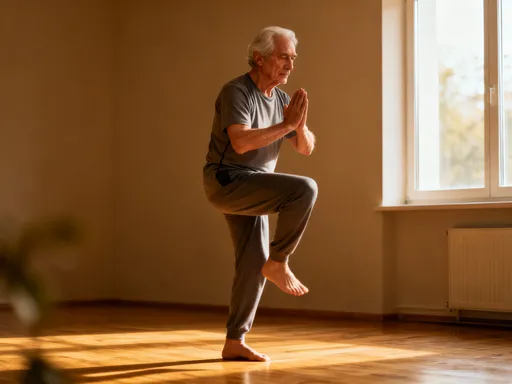
The most effective balance exercises are the ones you can do every day without special equipment or extra time. The key is integration—adding them to routines you already follow. For example, try standing on one leg while brushing your teeth. Start with 15 seconds per side and gradually increase. This simple act engages your core, improves ankle stability, and sharpens focus. As it becomes easier, close your eyes for a few seconds to challenge your proprioception further.
Another practical exercise is the heel-to-toe walk. Walk in a straight line, placing the heel of one foot directly in front of the toes of the other, like walking on a tightrope. Do this across a hallway or down a safe path. It mimics the natural gait pattern needed for stability and trains your body to maintain alignment. If space is limited, take just 10 steps forward and back—consistency matters more than distance.
Slow squats are another valuable tool. Instead of rushing up and down, focus on control. Lower yourself as if sitting into a chair, keeping your chest lifted and knees aligned over toes. Rise slowly, engaging your glutes and core. This builds strength in the muscles that support balance while improving joint awareness. You don’t need to go deep—just a partial squat with attention to form is enough.
For a more dynamic challenge, try turning in place slowly. Stand with feet shoulder-width apart and rotate your upper body left and right, letting your feet pivot naturally. This enhances coordination between your trunk and lower body, which is crucial when avoiding obstacles or changing direction quickly. These exercises don’t need to be done all at once. Spread them throughout the day—during commercial breaks, while waiting for the kettle to boil, or as part of a morning routine. The cumulative effect is what counts.
Lifestyle Tweaks That Support Better Stability
Beyond exercises, everyday choices can reinforce better balance. Footwear is a powerful lever. Consider alternating between supportive shoes and barefoot movement on safe surfaces. Walking barefoot on grass, sand, or even a textured mat at home stimulates the nerves in your feet, enhancing ground feedback. This sensory input helps your brain make faster, more accurate adjustments during movement.
Be mindful of walking surfaces. While pavement is predictable, occasionally walking on natural terrain—like a dirt path or beach—introduces subtle instability that strengthens stabilizing muscles. These small variations keep your neuromuscular system alert. If outdoor access is limited, try standing on a folded towel or balance pad while folding laundry. The slight give challenges your balance in a low-risk way.
Posture awareness is equally important. Throughout the day, check in with your alignment. Are your shoulders rounded? Is your head forward? Gently correct your posture, imagining a string lifting the crown of your head toward the ceiling. This not only reduces strain but also optimizes your center of gravity for better balance. Simple habits like holding your phone at eye level or taking short standing breaks can make a difference over time.
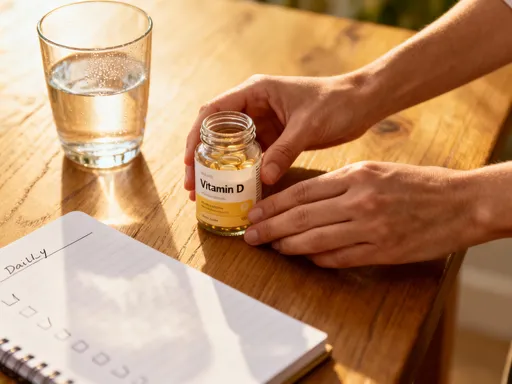
Hydration also plays a role. Joints function best when well-lubricated, and muscles respond more efficiently when the body is properly hydrated. While no supplement can replace movement, drinking enough water supports overall physical function, including balance. Movement itself is the best joint support—regular, varied motion keeps tissues supple and circulation strong.
Tracking Progress and Staying Motivated
Improvement in balance often happens in small, quiet ways. You might notice you no longer grab the counter when turning around. Or you catch yourself quickly when stepping on an uneven surface. These are real wins. To track progress, try simple tests. The timed up-and-go test, used in clinical settings, involves standing from a chair, walking 10 feet, turning, walking back, and sitting down. Timing yourself monthly can show improvements in speed and stability.
Another method is the single-leg stance test. Stand near a wall for safety and time how long you can hold one leg off the ground. Record both sides, as imbalances between left and right are common. Over weeks, you’ll likely see gradual increases. Don’t worry about perfection—focus on consistency. Even a few seconds longer is progress.
Motivation grows when you connect balance to meaningful activities. Maybe it’s playing with a grandchild without fear, walking the dog on a trail, or dancing at a family event. Keep these images in mind. Balance isn’t a chore; it’s an investment in freedom. Celebrate small milestones—like going a week without feeling wobbly or mastering a new exercise.
Remember, this isn’t about achieving athletic performance. It’s about reclaiming confidence in everyday movement. Some days will feel better than others, and that’s normal. The goal is not perfection, but presence—paying attention to how your body moves and responding with care. Over time, these small acts of awareness build a foundation of stability that supports every part of life.
Improving balance isn’t about dramatic changes—it’s in the small, repeated choices. By listening to your body and making mindful adjustments, you gain more than stability; you reclaim confidence in your movement. This quiet upgrade transforms how you experience everyday life. Simple habits, done consistently, create lasting change. You don’t need a gym, a trainer, or special equipment. You just need to start—wherever you are, with whatever time you have. And always consult a healthcare professional before starting new routines, especially if you have existing conditions. Your journey to better balance begins with a single, steady step.